 Suite 9.4, Level 9 Epworth Hospital, 89 Bridge Road Richmond VIC 3121

 03 95162895
 Book Now
How is an AMH Fertility Test Done?
Understanding fertility can feel overwhelming, especially when you are navigating questions about timing, hormones, and future family plans.
One of the most commonly discussed blood tests in fertility care is the AMH test. If you have been advised to have one, or you are simply seeking clarity, knowing how the test works may help you feel more informed and reassured.
AMH testing is often used as part of an initial fertility assessment. This article explains what an AMH fertility test is, how it is done, what it can and cannot indicate, and how the results are usually considered in the context of your overall health and reproductive history.
If you’re looking for a fertility clinic in Melbourne, contact our team at Dr Hugo Fernandes today.
What is AMH?
AMH stands for Anti Müllerian Hormone. It is a hormone produced by cells within the ovarian follicles, which are the small fluid-filled sacs that contain immature eggs.
Because AMH is linked to the number of follicles present in the ovaries, it is often used as an indicator of ovarian reserve.
Ovarian reserve refers to the estimated quantity of eggs remaining in the ovaries. It is important to understand that AMH does not assess egg quality, predict natural conception, or determine whether pregnancy will occur. Instead, it offers one piece of information that can help inform broader discussions about fertility.
Why is an AMH Fertility Test Recommended?
An AMH test may be suggested for several reasons, including:
- Planning for a future pregnancy
- Investigating menstrual cycle changes
- Exploring fertility options
- Assessing ovarian response before IVF treatment
- Supporting conversations around reproductive timing
AMH testing is often combined with other investigations, such as ultrasound scans, hormone blood tests, and a detailed medical history. This approach allows fertility care to remain individualised rather than based on a single result.
How is an AMH Fertility Test Done?
An AMH test is performed using a simple blood sample. The process is straightforward and generally quick.
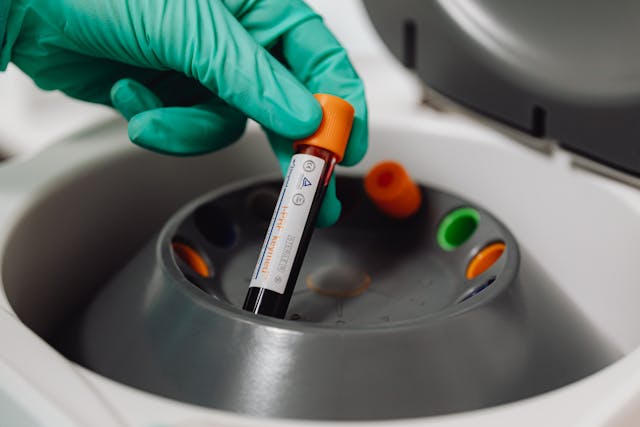
A healthcare professional will collect a small sample of blood from a vein in your arm. The sample is then sent to a laboratory for analysis. No surgical procedures, injections into the ovaries, or imaging tests are involved in the AMH test itself.
For most patients, the blood draw takes only a few minutes.
Discover our guide to fertility testing further here.
Do You Need to Prepare for the Test?
One of the benefits of AMH testing is that it does not usually require special preparation.
- Fasting is not required
- The test can be done on any day of your menstrual cycle
- You can continue most usual medications unless advised otherwise
This flexibility can make AMH testing easier to schedule, particularly for patients managing busy lives or irregular cycles.
When Will You Receive Results?
Results are typically available within a few days to a week, depending on the laboratory. Your doctor will review the results with you and explain how they fit into your overall fertility assessment.
It is important that results are discussed with the appropriate clinical context. AMH values can vary between laboratories, and reference ranges are influenced by age and individual health factors.
What Do AMH Levels Mean?
AMH results are reported as a numerical value. In general terms:
- Higher AMH levels may suggest a higher number of remaining follicles
- Lower AMH levels may suggest a lower ovarian reserve
However, these results are not diagnostic on their own. A lower AMH result does not mean pregnancy is not possible, and a higher result does not guarantee fertility.
AMH levels naturally decline with age, and individual variation is common. Some people with lower AMH conceive without assistance, while others with higher AMH may still face challenges.
What AMH Testing Does Not Tell You
It is equally important to understand the limitations of AMH testing.
AMH does not assess:
- Egg quality
- Chances of natural conception
- Time to pregnancy
- Overall reproductive health on its own
For this reason, AMH testing is best understood as a guide rather than a prediction. Results are most meaningful when combined with ultrasound findings, cycle history, lifestyle factors, and personal goals.
How AMH Results Are Used in Fertility Care
AMH results may help guide conversations around fertility planning and treatment options. For example, results may assist in:
- Understanding potential ovarian response during IVF
- Informing decisions about fertility preservation
- Supporting discussions about timing and next steps
Your doctor may also refer you to a fertility specialist as part of a broader care plan, particularly if further investigation or tailored treatment pathways are being considered.
Emotional Considerations Around AMH Testing
Receiving hormone test results has the potential to bring up a wide range of emotions. Some patients feel relieved to have information, while others may feel anxious or uncertain about what the numbers mean.
It is completely normal to need time to process results and ask questions. A caring, patient-centred approach ensures that conversations around AMH remain supportive, balanced, and focused on your individual circumstances rather than statistics alone.
When to Seek Further Advice
If you are considering AMH testing, or if you already have results and are unsure what they mean for you, speaking with a qualified fertility doctor may help provide clarity.
Every fertility journey is different. Test results are just one part of a much larger picture that includes physical health, emotional wellbeing, and personal priorities.
Understanding Your Next Steps
An AMH fertility test may offer helpful insight, but it is only one part of a broader fertility picture. Taking the time to understand your results in the context of your health, history, and personal goals allows for informed and considered decision-making.
If you’re exploring fertility care options, Dr Hugo Fernandes provides patient-centred fertility care with a focus on clear communication and thoughtful guidance. Appointments are available for individuals and couples seeking information, assessment, or next steps in their fertility journey.
