 Suite 9.4, Level 9 Epworth Hospital, 89 Bridge Road Richmond VIC 3121

 03 95162895
 Book Now
What is the Process of Getting Pregnant With IVF?
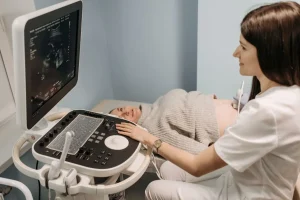
Deciding to explore IVF is rarely a straightforward decision, and for most people, it comes after a period of reflection.
If you are at that point, you need to understand what the process actually involves, from your very first appointment through to the pregnancy blood test that follows embryo transfer.
Every person’s path through IVF is shaped by their own circumstances, and no two treatment plans are identical. What follows is a general overview of the key stages in line with Dr Hugo Fernandes’ practice, so you know what to expect before you begin.
For personalised advice, contact Dr Hugo Fernandes today.
Starting With a Referral and Initial Consultation
Following a referral, the initial consultation is an opportunity to share your medical and reproductive history in full, discuss how long you have been trying to conceive, and understand what investigations will be needed before treatment starts.
Blood tests, a pelvic ultrasound, and a semen analysis are typically among the first assessments arranged.
This appointment is also a chance to ask every question you have been carrying; understanding when to go to a fertility doctor is something many people are unsure about, and a thorough initial consultation is where it generally begins.
Pre-Treatment Testing and Your Personal Treatment Plan
Once your initial results are reviewed, your fertility doctor will formulate a treatment plan tailored specifically to you. It will outline your medication, the timing of each phase, and any additional investigations or preparatory steps that may be recommended for you.
For some people, IVF is the recommended starting point. For others, simpler treatments may be explored first.
An experienced IVF doctor understands that surgery and assisted reproduction are not always the only or the best option, and will discuss your full range of choices with you before any treatment begins.
Ovarian Stimulation
Once your treatment cycle begins, the first active phase involves stimulating the ovaries to produce multiple follicles, each containing a potential egg. In a natural cycle, the body typically matures and releases just one egg per month.
In IVF, daily self-administered hormone injections, primarily follicle-stimulating hormone (FSH), are given over approximately eight to fourteen days to encourage the ovaries to produce more eggs. This increases the number of embryos available for assessment and transfer.
According to Pregnancy Birth & Baby, hormone stimulation treatment begins on day two or three of your menstrual cycle, and the medications work to stimulate follicles so they produce several eggs.
Medication doses may be adjusted throughout this phase based on how your body responds.
Monitoring During Stimulation
Throughout the stimulation phase, you will attend regular monitoring appointments involving blood tests and vaginal ultrasounds. These allow the clinical team to track follicle growth, assess hormone levels, and time the next step with precision. The aim is to retrieve eggs at the optimal point in their development, neither too early nor too late.
A rare but important risk during this phase is Ovarian Hyperstimulation Syndrome (OHSS), a condition in which the ovaries respond more intensely than anticipated, causing swelling and discomfort.
Your treating doctor will monitor you closely to reduce this risk and adjust your protocol if needed.
The Trigger Injection
When your follicles have reached the appropriate size, you will administer a trigger injection, typically containing human chorionic gonadotrophin (hCG) or a similar hormone.
This prompts the eggs to undergo their final maturation. Egg collection is then scheduled approximately 34 to 36 hours after the trigger shot, making the timing of this step particularly precise.
Egg Collection
Egg collection, sometimes called egg retrieval or egg pick-up (EPU), is a day procedure performed under sedation. Using ultrasound guidance, a fine needle is passed through the wall of the vagina to retrieve the fluid from each follicle.
The procedure typically takes around 20 to 30 minutes, and most people return home the same day. The retrieved eggs are passed immediately to the embryology team for assessment.
Fertilisation and Embryo Development
On the day of egg collection, a semen sample is provided by the male partner, or donor sperm is prepared in the laboratory.
The eggs and sperm are then combined either through conventional insemination or through a technique called Intracytoplasmic Sperm Injection (ICSI), where a single sperm is injected directly into an egg.
ICSI is typically recommended where there is a male factor contributing to infertility, or where previous fertilisation has been suboptimal.
The following day, the embryologist assesses which eggs have successfully fertilised. Fertilised eggs are then cultured in a closely controlled laboratory environment for approximately five days.
By day five, the most developed embryos will have reached the blastocyst stage, which is considered the optimal point for either transfer or freezing.
Embryo Transfer
Embryo transfer is a straightforward procedure that does not require sedation. A thin catheter is passed through the cervix and into the uterus, and the selected embryo is gently released under ultrasound guidance.
The procedure takes only a few minutes and is comparable in experience to a cervical screening.
Generally, a single embryo is transferred to minimise the risk of multiple pregnancy, though individual clinical circumstances may influence this decision.
Any additional viable embryos developed during the culture period may be suitable for vitrification, a process of rapid freezing that allows them to be stored for future cycles if needed.
The Two-Week Wait and Pregnancy Testing
Approximately two weeks after embryo transfer, a blood test is performed to measure hCG levels and determine whether a pregnancy has been established.
A home urine test is generally not recommended at this stage, as the hormone medications used throughout the cycle may produce an inaccurate reading.
The two-week wait is often the most emotionally demanding part of the process. It is entirely normal to feel anxious, hopeful, and uncertain all at once.
Many people find it helps to keep some routine and structure during this period, and to have support around them, whether from family, friends, or a counsellor familiar with fertility treatment.
Whatever the outcome, your doctor will discuss the result with you and walk through the appropriate next steps.
Understanding Costs and Medicare
Medicare cover for IVF in Victoria is available for some aspects of treatment, including consultations, certain tests, and some hospital services, where the treatment is deemed medically necessary.
Private health insurance may also contribute to hospital-related costs, which is why understanding your specific entitlements before starting treatment is worthwhile, and your clinic’s team will typically guide you during the pre-treatment phase.
Speak With a Fertility Doctor in Melbourne
If you are considering IVF treatment in Melbourne and would like to understand more about what the process may involve for your specific circumstances, speaking with a fertility doctor who takes a personalised, patient-centred approach is an important first step.
Dr Hugo Fernandes is a founding partner and clinical director of NewLife IVF, with a focus on tailoring treatment to each person rather than applying a one-size-fits-all approach.
.
